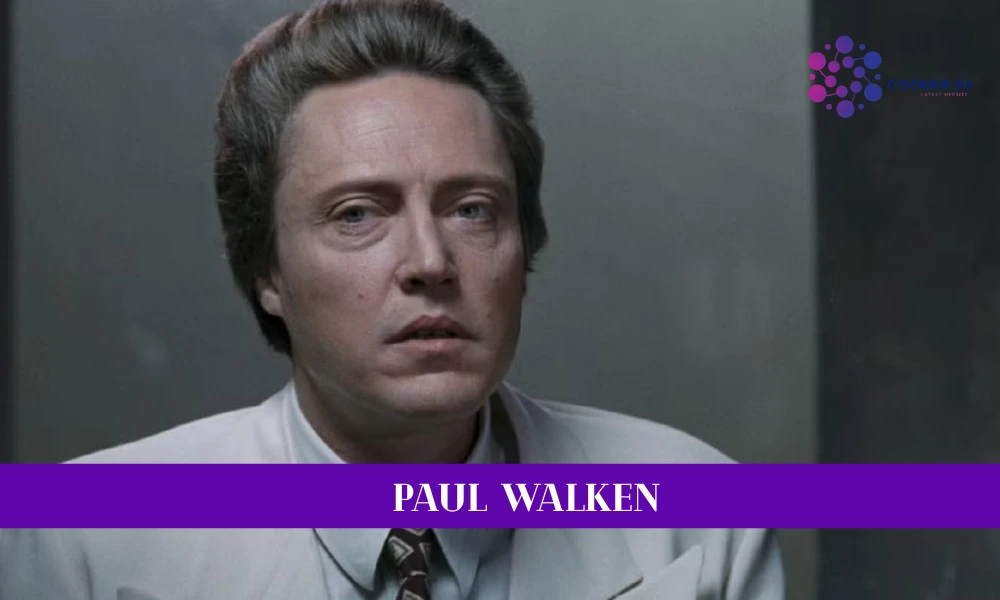
When people hear the Walken name, they usually think of Christopher Walken, the Oscar-winning actor with one of the most recognizable voices in Hollywood. Yet behind that famous name stood a hardworking father whose life shaped the family’s story. Paul Walken was a German-born baker, husband, father, and small business owner who built a steady life in Queens, New York. His story matters because it connects immigrant ambition, family discipline, and the early home environment that helped shape one of America’s most distinctive performers.
Quick Bio Paul Walken
| Category | Details |
| Full Name | Paul Joseph Wälken, also written as Paul Walken |
| Known For | Father of actor Christopher Walken; owner/operator of Walken’s Bakery in Astoria, Queens |
| Profession | Baker and bakery owner |
| Birth | October 5, 1903, according to several family-history listings |
| Birthplace | Germany, often listed as Essen or the Gelsenkirchen area |
| Death | Commonly listed as February 23, 2001, though some online memorial records show conflicting information |
| Nationality | German-born; later lived in the United States |
| Spouse | Rosalie Russell Walken |
| Children | Kenneth Walken, Ronald “Christopher” Walken, and Glenn Walken |
| Residence | Astoria and later Bayside/Flushing area, Queens, New York |
| Business | Ideal Bakery, later known as Walken’s Bakery and Café |
| Public Image | Private, hardworking, family-focused, and closely tied to Astoria’s immigrant community |
| Net Worth | Not publicly verified |
Who Was Paul Walken?
Paul Walken lived a private life, but his influence reached far beyond his bakery. He came from a German baking background and later became known as the father of Christopher Walken. The New Yorker described Christopher’s father as a baker from a family of German bakers, which fits the larger story of a man whose trade shaped his daily life and family identity.
Unlike his famous son, Paul did not build a public career in entertainment. Instead, he worked with his hands, served local customers, and helped support a household in Queens. His life shows how ordinary work can create extraordinary influence. Through routine, discipline, and family responsibility, he gave his children a stable foundation.
Early Life and German Roots
Paul was born in Germany in the early 20th century, a period when many European families relied on trades for long-term survival. Public family-history listings commonly give his birth date as October 5, 1903. These same sources place his origins in Germany and connect him to the Wälken or Walken family line.
His family background matters because baking was not just a job in his life. It was a craft passed through generations. In many European households of that era, children learned practical skills early. A trade gave a young person stability, pride, and a way to support a family. Paul carried that mindset with him when he left Europe.
Some public records about his life conflict, especially around dates and locations. Several family-history pages list his death as February 23, 2001, while a Find a Grave search result shows 1971. Because of that, writers should treat exact record details carefully and avoid presenting uncertain claims as absolute fact.
Moving to America and Settling in Queens
Paul’s move to the United States placed him in one of America’s most diverse urban settings. Queens, especially Astoria, attracted immigrants from Europe and beyond. People brought languages, food traditions, religious customs, and work habits into crowded neighborhoods. In that environment, a skilled baker could find both customers and community.
Astoria became the center of the Walken family story. Local reporting says Christopher Walken, born Ronald Walken, lived with his family at 30-83 29th Street in Astoria. The same account identifies Rosalie Russell as a Scottish immigrant and Paul Wälken as a German immigrant from a long line of bakers.
This setting also shaped Christopher’s early memories. The family lived near the bakery, and the neighborhood blended many accents and cultures. That mix helped create the rhythm of daily life around the Walkens. For Paul, Queens offered a place to work hard, raise children, and build a business that served local families.
Also Read: Mason Soiza The T: Meaning, Story, and Online Search Trend
Walken’s Bakery and His Working Life
The bakery became the heart of Paul’s public life. Local Astoria coverage reports that the family first opened Ideal Bakery on Broadway before later moving a few doors down and reopening as Walken’s Bakery and Café. The shop became part of the neighborhood’s daily routine.
Running a bakery demanded long hours and steady discipline. Bakers often started work before dawn so customers could buy fresh bread, cakes, and pastries in the morning. Christopher later remembered working at the bakery with his family around three in the morning while making jelly donuts, according to local Astoria reporting.
The shop also connected the Walken family to other future public figures. PBS SoCal notes that Christopher Walken’s father owned and operated a bakery where a young Lidia Bastianich worked. Bastianich later became a celebrated chef, television host, author, and restaurateur.
This detail adds depth to the bakery’s legacy. It was not only a family business; it was also a small workplace where young people learned service, food, and discipline. The bakery belonged to a world where local stores anchored neighborhoods and owners often knew their customers personally.
Marriage, Family Values, and Home Life
Paul married Rosalie Russell Walken, a Scottish immigrant who played an important role in her sons’ early exposure to performance. Public family-history listings connect Rosalie and Paul as husband and wife and name their children as Kenneth, Ronald, and Glenn. Ronald later became famous under the stage name Christopher Walken.
The Walken household mixed two strong influences. Paul represented discipline, craft, and routine. Rosalie brought energy, ambition, and interest in show business. That combination gave the children both structure and creative opportunity. The boys grew up around a working bakery, but they also entered entertainment at a young age.
Christopher and his brothers worked as child actors during the early television era. This was a time when New York television used many local children for live productions and variety programs. The family’s Queens location made those opportunities more accessible. Paul’s steady work gave the home a practical base while Rosalie encouraged performance.
Family memories often return to Astoria because the neighborhood shaped everyone’s identity. In a 2010 New Yorker piece, Christopher visited his old neighborhood and his father’s former bakery location, which had become a hardware store. He noticed details such as the ceiling, floor, and the old bakery space, showing how deeply that place stayed in his memory.
Also Read: Kelly South: Net Worth, Biography, Career Highlights, and Achievements
Relationship with Christopher Walken
Christopher Walken’s career made the family name famous, but his father’s role stayed quieter. Paul did not teach acting, direct films, or manage a Hollywood career. Instead, he modeled discipline through daily work. A bakery requires timing, patience, repetition, and precision. Those values translate naturally into performance, where timing and control also matter.
Christopher’s speech and rhythm have drawn attention for decades. Many writers connect that unique cadence to the multilingual environment of his childhood. He grew up around immigrant voices, including his father’s German background and his mother’s Scottish roots. The New Yorker account also notes that everyone who worked in the bakery spoke German.
That environment likely gave Christopher an ear for unusual rhythms and speech patterns. However, it is better to avoid saying Paul alone “created” Christopher’s voice. A person’s style develops from many influences, including family, neighborhood, theater training, dance, and personal instinct. Paul was one strong part of that larger picture.
Christopher’s acting career eventually brought major recognition. He won the Academy Award for Best Supporting Actor for The Deer Hunter, and the Academy’s own database lists him as the winner in that category. His later nomination for Catch Me If You Can further showed the long reach of his career.
Paul’s influence shows most clearly in the work ethic behind that career. Christopher became known for taking many roles, staying active, and approaching performance with a distinctive seriousness. While the son entered the spotlight, the father’s example remained rooted in the quieter world of early mornings, ovens, customers, and family duty.
FAQs
Who was Paul Walken?
He was a German-born baker, bakery owner, and the father of actor Christopher Walken. He ran a bakery in Astoria, Queens, and helped raise three sons with his wife, Rosalie Russell Walken.
What did he do for a living?
He worked as a baker and operated a family bakery in Queens. The business was known first as Ideal Bakery and later as Walken’s Bakery and Café.
Was he involved in Hollywood?
No. He did not work as an actor or filmmaker. His public connection to Hollywood comes mainly through his son Christopher Walken’s acting career.
Who was his wife?
His wife was Rosalie Russell Walken. Public family-history records describe her as the mother of Kenneth, Ronald “Christopher,” and Glenn Walken.
Why do people search for him today?
People search for him because they want to understand Christopher Walken’s family background, childhood, and early influences. His bakery, immigrant roots, and family values all add context to the Walken story.
Conclusion
Paul Walken remains an important figure because his life explains part of the foundation behind a famous American actor. He built his story through work, family, and community rather than fame. As a German-born baker in Queens, he helped create a stable home where his children learned discipline and possibility. His bakery connected neighbors, supported his family, and left lasting memories in Astoria. Although Christopher Walken became the household name, Paul’s quiet influence still forms a meaningful part of the Walken legacy.
You May Also See: Coomersu